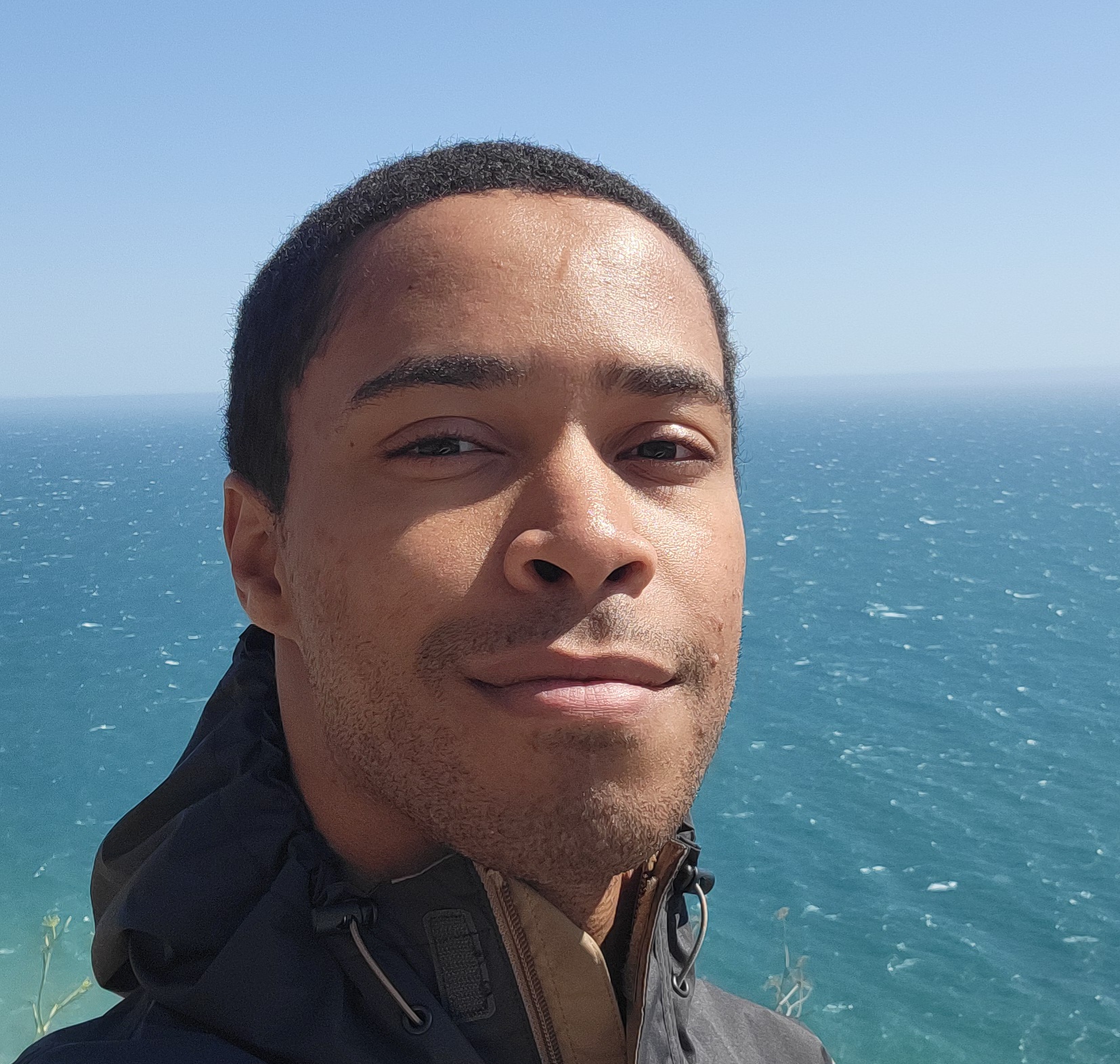
About myself
Hi there! My name is Philippe Bouchet. I’m a Research Engineer at the Ecole Normale Superieur in the Biology Department (IBENS), working under the supervision of Prof. Auguste Genovesio. I am currently exploring the applications of generative modeling, such as flow matching, in the context of malaria detection. While microscopic images can clearly reveal the presence of parasites when visible, the parasite may not always be present in a given image, even if the infection exists. Building on previous work from our lab, which demonstrated that a deep learning network can detect a submicroscopic signal, I am now exploring how flow matching can help characterize the shift in data distribution between negative and positive cases.By modeling this shift, we aim to generate synthetic samples of varying difficulty. These samples will then be used within a contrastive learning framework as a pre-training step for our encoder, to generate meaningful embeddings for the classifier head.
Previously, I was a research intern at Lunit in the Cancer Screening Group, working closely under the supervision of Dr. Thijs Kooi and Dr. Hyungseob Shin. My research focused on applying contrastive learning to time-to-event prediction models for breast cancer risk assessment, with the goal of supporting radiologists in making more accurate and timely treatment decisions for their patients.
I earned my diplôme d’ingénieur (French diploma, joint B.S. and M.S. degree) from EPITA in 2023, specializing in deep learning and computer vision, with a strong focus on medical applications. In 2022, I had the opportunity to collaborate with Prof. Edwin Carlinet at EPITA’s LRE Research Laboratory, focusing on computer vision and biomedical imaging. Under his guidance, I explored how morphological methods, such as max-trees, can be utilized for quick and robust medical image annotation. During the same period, I also worked with Prof. Nicolas Boutry on developing a novel method for brain tumor segmentation. We implemented a cascaded model framework, where the output from each model was passed to the next model in the sequence. “Guiding” subsequent models in this manner improved their segmentation accuracy, especially in subtle and small-scale tumor features. In 2023, I completed a research internship at Siemens Healthineers in Princeton, where I contributed to the development of deep learning models for cardiovascular imaging. My work included left ventricular (LV) segmentation for blood pool estimation, training multi-modal cardiac foundation models across MRI, CT, and ultrasound data for various downstream tasks, and reconstructing 3D representations of the left atrium (LA) from 2D imaging to assist in surgical planning for cardiac ablation procedures.
Outside of research, I enjoy playing guitar, hiking, and practicing Brazilian Jiu-Jitsu. And I really enjoy travelling, especially having recently returned from a 2 month long roadtrip across the western U.S., exploring the vast openness of the American wilderness! I also enjoy reading about 19th-century history, and occasionally take an interest reading about different cultures and global perspectives. I’d say I’m driven by curiosity and a love of learning, exploring new ideas across various disciplines simply for the fun of it!
Research
My primary research focus is on bridging the gap between medical practitioners and computer science by exploring how deep learning methods can provide clinicians with more accurate and reliable information to improve their decision-making process. I believe this focus is reflected in my experience applying AI in the medical domain, where I work on translating complex models into practical tools for healthcare professionals. To build truly impactful and trustworthy systems in this space, I believe it is essential to prioritize safe and ethical AI practices in the medical field in order to mitigate errors, bias, and unintended consequences, especially in a world where AI is evolving at an unprecedented pace. With this in mind, I am particularly interested in computer vision, with a recent focus on contrastive learning[1].
Contrastive learning, as a self-supervised learning method, shows great promise for improving the performance of existing models, particularly in the medical domain where annotated data is often costly and scarce. By using contrastive learning, I aim to make high-performing models more accessible and generalizable in data-constrained environments. For example, during my time at Lunit, I worked on enhancing models for breast cancer risk prediction by using contrastive learning as a pre-training method, developing clusters of cancer vs. non-cancer patients in latent space. This approach conditioned the model to better recognize early signs of breast cancer, resulting in improved downstream performance when finetuned. As such, my goal is to explore how self-supervised methods, such as contrastive learning, can be effectively used to enhance model performance in settings where labeled data is limited, ultimately improving the reliability of predictions provided to medical practitioners, supporting them in making critical clinical decisions.
Naturally, my interest in contrastive learning evolved from a prior fascination with Vision-Language Models (VLMs). In the medical domain, while there is often a wealth of multimodal patient data (e.g: Medical images paired with textual reports) these image-text relationships remain largely underutilized. Traditional approaches tend to treat these modalities in isolation, with large language models (LLMs) focused on text and computer vision models handling imagery independently. I believe that VLMs offer significant potential for advancing medical diagnostics by jointly leveraging these complementary data sources. By effectively aligning and learning from image-text pairs, VLMs can enable more context-aware diagnostic tools, leading to more accurate clinical insights.
References
[1] A. Radford et al., ‘Learning Transferable Visual Models From Natural Language Supervision’, arXiv [cs.CV]. 2021. https://arxiv.org/abs/2103.00020